Why your garage door won't close and how to fix it
Most often it is the safety sensors by the floor. If cleaning and aligning them does not work, the next five causes are below, easiest first.
Published
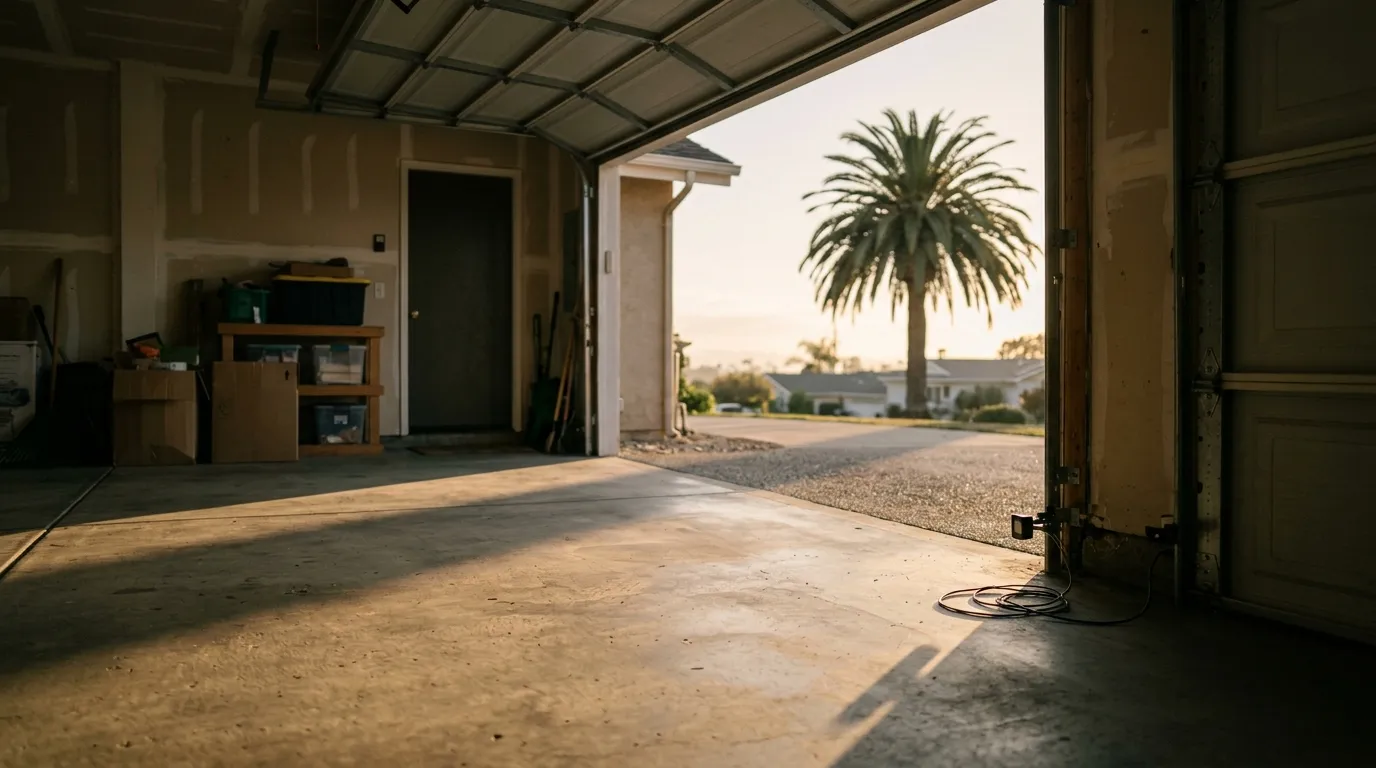
When a garage door won’t close, the photo-eye sensors near the floor are most often the cause. Wipe both lenses, check that each sensor’s light is steady, and clear anything out of the doorway. If the door still reverses, work down the list below, from the tracks to the opener settings to the springs.
Six causes, in the order to check them
-
The sensors. Two small units face each other across the opening, a few inches off the floor. One sends a beam and the other receives it. Each has an indicator light. A light that is off or flickering means the beam is not arriving. Wipe both lenses with a soft cloth. Sight along them and nudge the bracket until both lights hold steady. Then look at the thin wires running up the wall for staples through the insulation or green corrosion at the terminals, which salt air encourages near the coast.
-
Sun on the lens. If the door fails only in the late afternoon and your garage faces west, low sun may be flooding the receiving sensor. Stand so your shadow falls across it and press the button. If the door closes, you have your answer. A sensor repair visit can shade or reposition the units.
-
Something in the track or the doorway. A broom handle leaning into the opening will do it. So will a small stone or a bent bit of weatherstrip inside the vertical track. Look along both tracks from the floor up.
-
The close-limit or force setting. If the door reaches the floor and immediately goes back up, the opener believes it hit an obstruction. The travel limit may be set a little too far, so the door presses into the concrete. If the door stops short and reverses, the force setting may be off, or the door has grown stiff. Those settings control how hard the door pushes before it reverses, so leave them to a technician, who will test the auto-reverse afterward.
-
Binding rollers or a bent track. Watch the door come down. A hesitation or shudder at the same spot every time means something is dragging there: a seized roller, a loose hinge or a track knocked out of line. The opener reads the drag as an obstruction and reverses. Do not raise the force setting to push through it.
-
A broken spring or cable. These usually show up as a door that will not open, but a door that is suddenly heavy can also slam, hang crooked or refuse to travel. If you see a gap in the spring coil or a slack cable, stop using the door.
One more that looks like a fault and is not: if the wall button closes the door and the remotes do nothing, the wall control’s lock setting is on. The manual shows how to switch it off.
What the blinking light is telling you
When the opener’s light bulbs flash and the door goes back up, the opener is reporting that it refused to close. On most units a small LED on the motor housing or the wall control also blinks a number of times, pauses and repeats. That count is a diagnostic code.
We are not going to print a code table here, because the meanings differ by brand and by model, and a wrong table is worse than none. LiftMaster, Chamberlain and Genie each publish theirs in the manual, and the model number is on the motor unit. Count the blinks, find the chart, and you will know whether the opener blames the sensors, the travel or its own electronics. If it points at the logic board or the motor, see garage door opener repair.
Closing it tonight by holding the wall button
Most openers let you override the sensors by pressing and holding the wall button until the door is fully down. Let go early and it reverses. The remote will not do this.
This is fine as a way to secure the house tonight, on two conditions. The doorway is clear and you can see all of it while the door travels. And the door moves smoothly, with no crooked hang or grinding. It is not a repair. The sensors are still not working, and tomorrow you will be holding the button again.
Never tape or bypass the sensors Federal rules based on UL 325 have required entrapment protection on openers sold from 1993 on. Taping the two sensors face to face, or twisting their wires together, leaves the door with nothing to stop it closing on a person, a pet or a car hood.
If the door is stuck open for the night
Sometimes holding the button does not work, or the door is jammed crooked and should not be moved. Then the job is to make the house safe until someone arrives.
- Lock the door between the garage and the house.
- Bring in bikes, tools and anything else that is easy to carry off. Leave a car that is inside where it is unless the door is fully open, level and steady.
- Do not pull the red release cord with the door up. If a spring or cable has failed, the door can drop.
- Keep people from walking under a door that is hanging unevenly.
Then call. The line is answered around the clock, and a door stuck open counts as an emergency repair. If the door has left its tracks, the off-track door page explains why forcing it bends panels.
An open door and your HOA
In some North County communities an open garage door is a rules matter as well as a security one. Ocean Hills in Oceanside recorded 121 citations in a single month for garage doors left open, according to the community newsletter. If your association has a similar rule, a door that will not close can cost you before the repair does. Tell the management office that a repair is booked.
When to stop checking and call
You have done your part once the lenses are clean, the lights are steady, the tracks are clear and the door still reverses. From there the fault is in the wiring, the sensors themselves, the opener or the door hardware.
Fixr’s 2026 national guide puts sensor repair at $85 to $250. That is a typical range from a cost guide, and the technician inspects and quotes before starting. Same-day service is available across Carlsbad, and estimates are free. Start with garage door sensor repair and say what the indicator lights are doing when you call.